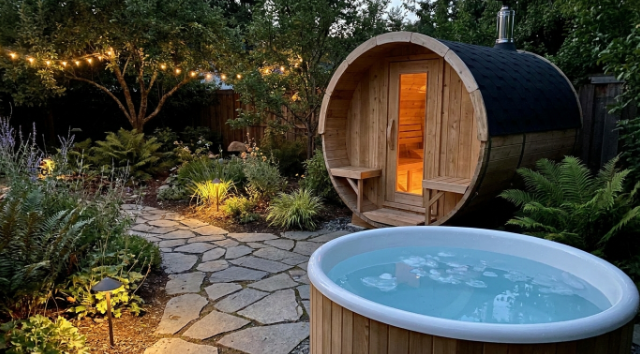
A 6-person sauna needs a level, stable, well-draining base able to support 1,500 to 2,500 pounds of empty cabin weight plus occupants, and the three common options are a 4-inch concrete pad, a properly prepared paver or compacted gravel base, or an existing deck confirmed to have adequate load capacity. Concrete offers the most durability and the least long-term maintenance. Gravel and pavers cost less and drain well but need correct sub-base preparation to avoid shifting. A deck can work but often needs a contractor to confirm the joists can handle the concentrated weight before the cabin goes up.
Why Does the Base Matter This Much for a Sauna?
A sauna cabin this size is heavier and less forgiving of movement than most outdoor structures homeowners install themselves. An empty 6-person cedar cabin typically weighs 1,500 to 2,500 pounds, and that load needs to sit level within a small tolerance, generally no more than a quarter inch of variance across the footprint, or doors stop closing flush and joints in the paneling start to stress over a season of settling. Drainage matters just as much as levelness, since standing water under or against the cabin’s base accelerates wood rot and creates a slip hazard right where people step out barefoot and wet after a session.
See also: What the Evolutionary.org Forums Say About Peptide Vendors
What Makes a Concrete Pad the Most Durable Option?
A poured concrete pad, typically 4 inches thick over a compacted gravel sub-base, is the most stable and lowest-maintenance option for a 6-person cabin. It does not shift, settle unevenly, or require periodic releveling the way a gravel or paver base can if the sub-base was not compacted properly at the outset. The tradeoff is upfront cost and lead time, since pouring concrete generally means hiring a contractor, waiting for a proper cure, and sometimes pulling a permit depending on the pad’s size and local requirements. For a permanent installation that is not expected to move, concrete is usually worth the extra step.
How Do You Prepare a Gravel Base Correctly?
A gravel base is the more budget-friendly and often faster option, but it only works well when built correctly. That means excavating a few inches of topsoil, compacting a sub-base layer of crushed stone, adding a leveling layer of smaller, angular gravel on top, and using edge restraints such as landscape timbers or paver edging to keep the gravel from spreading outward under load over time. Skipping the compaction step and simply raking loose gravel over bare dirt is the most common reason a gravel-based sauna installation settles unevenly within the first year. Done properly, a compacted gravel base drains exceptionally well and handles freeze-thaw cycles better than concrete in some climates.
What About Pavers as a Middle Option?
Interlocking concrete or stone pavers over a properly prepared gravel sub-base sit between concrete and loose gravel in both cost and effort. They drain well, look more finished than bare gravel, and can be adjusted or releveled individually if one section settles, which is not possible with a poured slab. The prep work is similar to a gravel base: compacted sub-base, sand leveling layer, then pavers set tight with polymeric sand in the joints to lock them in place. This is a common choice for buyers who want a finished look without the cost and permanence of a full concrete pour.
Can a 6 Person Sauna Go on an Existing Deck?
Sometimes, but this is the option that most often gets underestimated. A standard residential deck is engineered for foot traffic and scattered furniture loads, not necessarily a 1,500 to 2,500 pound structure concentrated over an 8-by-8-foot footprint. Before placing a sauna on an existing deck, it is worth having a contractor check joist spacing, span, and overall load rating, and potentially adding blocking or additional support beams underneath if the deck was not originally built with this kind of load in mind. A newly built deck can be engineered for the load from the start, which sidesteps the retrofit question entirely. Where a deck sits over an open crawl space rather than solid ground, adding a support post or two directly beneath the sauna’s footprint is a common and relatively inexpensive way to carry the extra weight without redesigning the whole structure.
How Does Base Choice Affect Long-Term Maintenance?
Concrete needs the least attention once cured, generally just periodic cleaning. Gravel and paver bases benefit from an annual check for settling or gaps at the edges, particularly after a hard winter, and occasional top-up of the surface layer. A deck base carries the deck’s own maintenance schedule, including checking for wood rot or fastener corrosion around the area supporting the sauna’s weight, since that area sees more consistent moisture from sweat and runoff than the rest of the deck typically does. None of these require much time, but skipping the annual check on a gravel or deck base is how minor settling turns into a door that no longer closes evenly.
What Should Buyers Confirm Before Choosing a Base?
The manufacturer’s installation guide is the actual source of truth here, since exact weight, footprint, and clearance requirements vary by model and should drive the base decision rather than a general rule of thumb. When comparing 6-person cabin options and their published weight and footprint specs across sellers including Almost Heaven, Dundalk Leisurecraft, and SweatDecks 6-person saunas, it is worth pulling the installation manual before finalizing the pad or deck plan, since a base built to the wrong dimensions is a common and avoidable source of installation delays.
How Far Ahead Should the Base Be Built?
Concrete needs time to cure, typically a week before it can safely bear the cabin’s full weight, and even a gravel or paver base benefits from settling for a few days under light traffic before the sauna arrives. Scheduling the base work two to three weeks ahead of delivery gives enough buffer for weather delays, a contractor’s schedule, or a discovery mid-project that the ground needs more excavation than expected. Ordering the sauna and the base work to land on the same week is the most common way a finished cabin ends up sitting on plastic sheeting for a month waiting on a pad that was started too late.
Frequently Asked Questions
What is the best base for a 6 person sauna? A concrete pad is generally the most durable, but a properly prepared paver or gravel base, or a rated deck, all work when built to the manufacturer’s specifications.
Can a 6 person sauna sit directly on gravel? Yes, if the gravel base has a compacted sub-base, a leveling layer, and edge restraints, rather than loose gravel over dirt.
How thick should a concrete pad be for a 6 person sauna? Most residential pads run 4 inches thick over a compacted gravel sub-base.
Does a deck need reinforcement to hold a 6 person sauna? Often yes. A contractor should confirm joist spacing and load capacity before placing a sauna on an existing deck.
References
- Cardiovascular and Other Health Benefits of Sauna Bathing: A Review of the Evidence, Mayo Clinic Proceedings, 2018
- Clinical Effects of Regular Dry Sauna Bathing: A Systematic Review, Evidence-Based Complementary and Alternative Medicine, 2018
- Does the Combination of Finnish Sauna Bathing and Other Lifestyle Factors Confer Additional Health Benefits? A Review of the Evidence, Mayo Clinic Proceedings, 2023
By Sarah Lindqvist